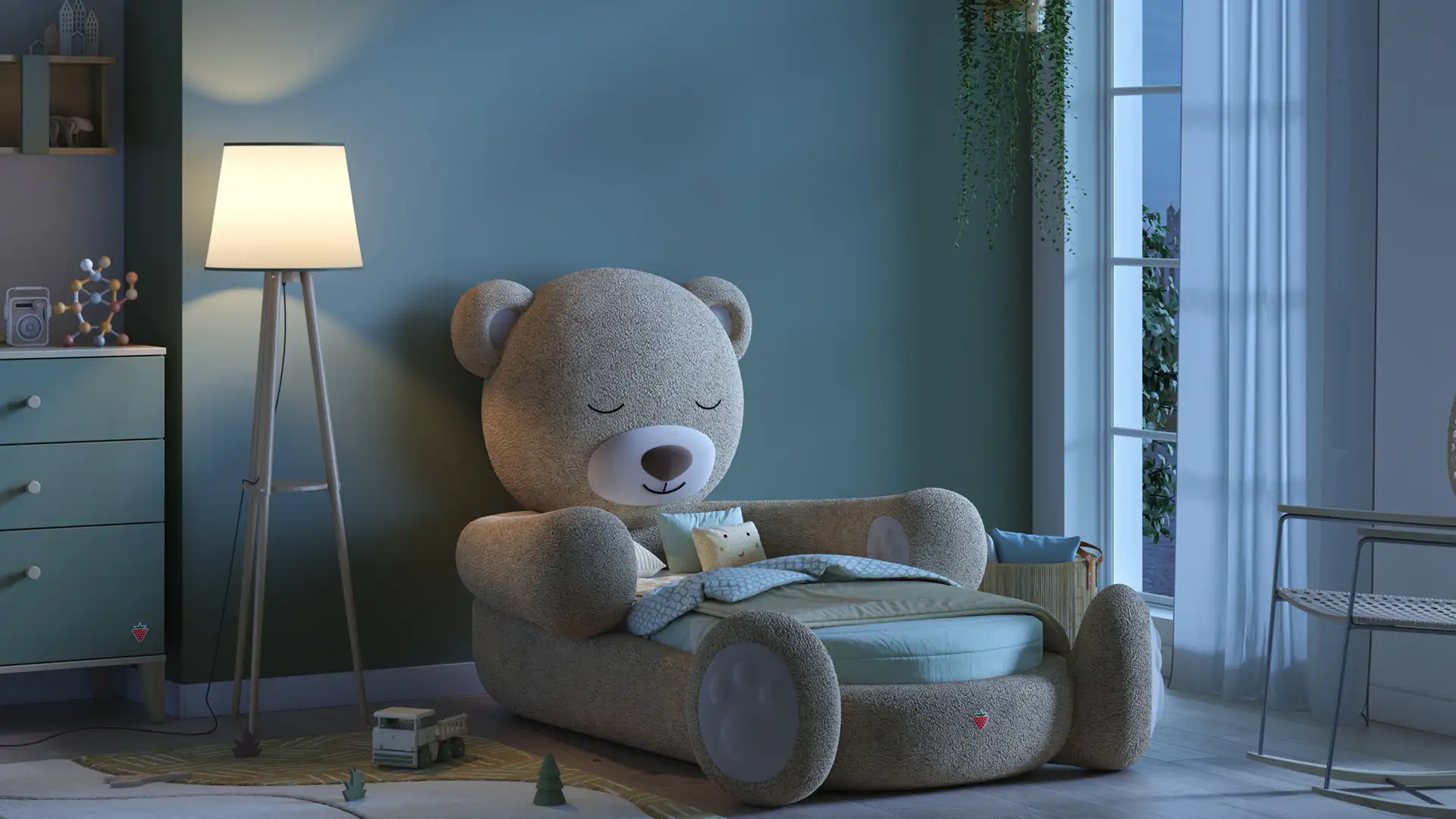
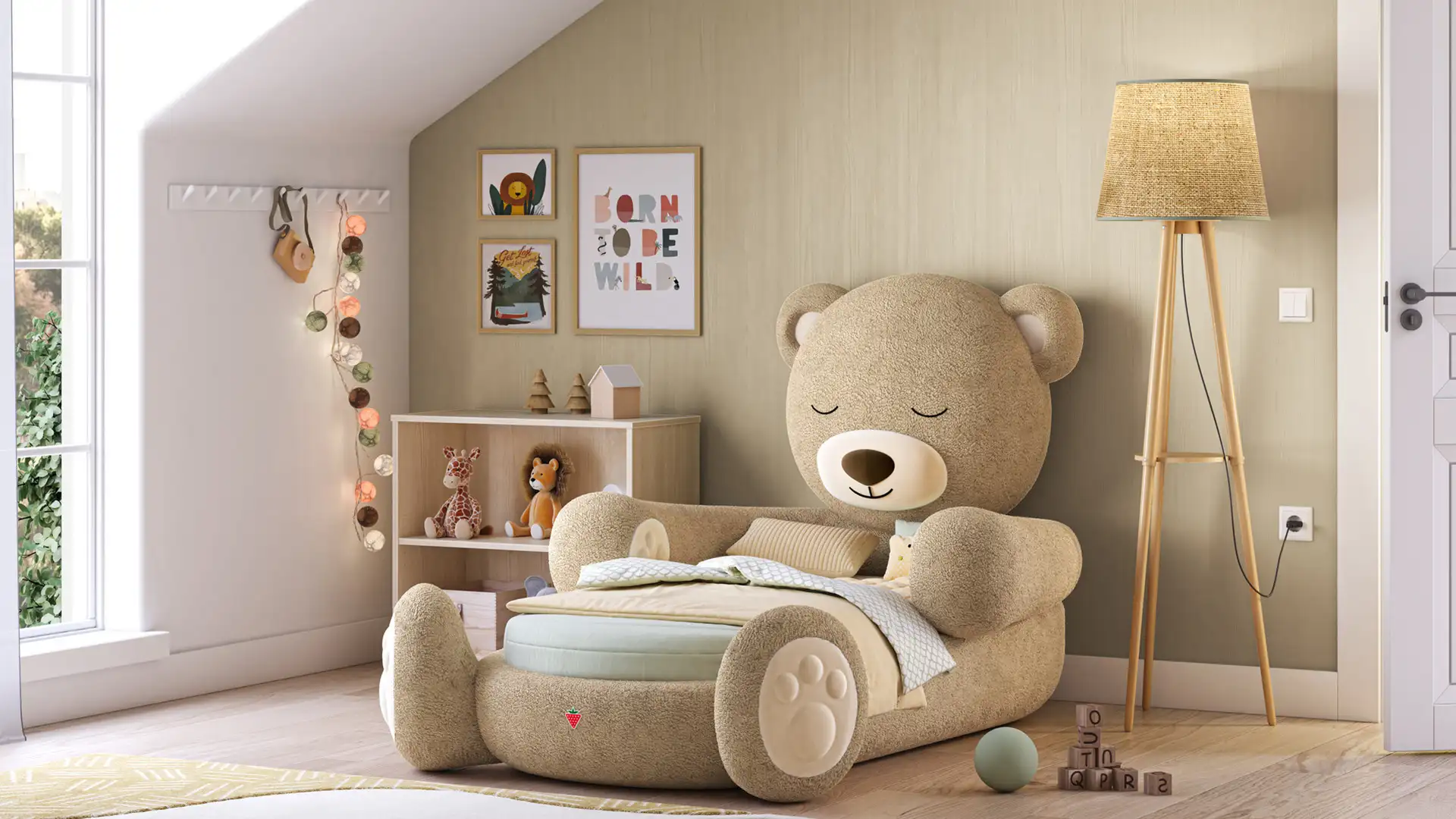
For young children, the journey from sleeping beside their mother to resting independently in their own bed is often emotionally complex. The transition from breastfeeding to toddlerhood marks a significant developmental milestone—one that challenges the secure attachment children have come to rely on. As they grow, learning to sleep on their own becomes an essential step toward autonomy and emotional resilience. The Teddy Bed was thoughtfully designed to support this transition by addressing both the emotional and physical needs of children experiencing separation anxiety. It offers not only a safe sleep environment, but also a sense of comfort and companionship that helps children develop independent sleeping habits in a reassuring, child-centered way. Research in early childhood development highlights the critical role of transitional objects in easing separation.
Familiar, sensory-rich transitional objects—like a soft toy or blanket—help children feel secure and self-soothe as they navigate the shift to sleeping alone. Teddy Bed integrates this psychological insight into its very form: it is both a comforting presence and a fully functional bed. The design intentionally blurs the line between toy and furniture. User research conducted with a focus group of 34 nine-year-old children confirmed this approach—rather than perceiving Teddy merely as a bed, the children interacted with it as they would with a beloved toy: hugging, playing, and forming emotional bonds that made bedtime feel more inviting and joyful. Shaped like a teddy bear, Teddy blends emotional familiarity with thoughtful functionality. Its plush head, arms, and legs are soft and huggable, creating a sense of closeness and companionship. These features are designed not only for aesthetic appeal but also to provide tactile comfort and encourage emotional engagement through touch, cuddling, and play. Functionally, the bear’s outstretched arms also serve as subtle guardrails, gently preventing children from rolling off the bed while maintaining the softness and visual warmth of the design. More than a piece of furniture, Teddy serves as a transitional object—offering the child a reliable, non-retaliatory figure that absorbs their emotional energy, including expressions of frustration or fear. In this way, Teddy becomes a safe and constant feature of the child’s world, one that nurtures and supports emotional development during moments of vulnerability.
From a construction perspective, the bed is crafted using a hybrid approach that draws from both traditional furniture-making and plush toy manufacturing techniques. The structural base is built like an upholstered chair, using a robust internal frame and recyclable polyurethane sponge padding to ensure sustainability. The head, arms, and legs are produced using soft toy methods: fabrics are sewn and filled with reused sponge to create a plush, inviting texture that’s both durable and comforting. By uniting design empathy with developmental psychology, the Teddy Bed transforms bedtime into a positive, emotionally secure experience. It fosters independence while honoring the child’s need for closeness, offering a gentle and joyful transition into a new stage of growth.