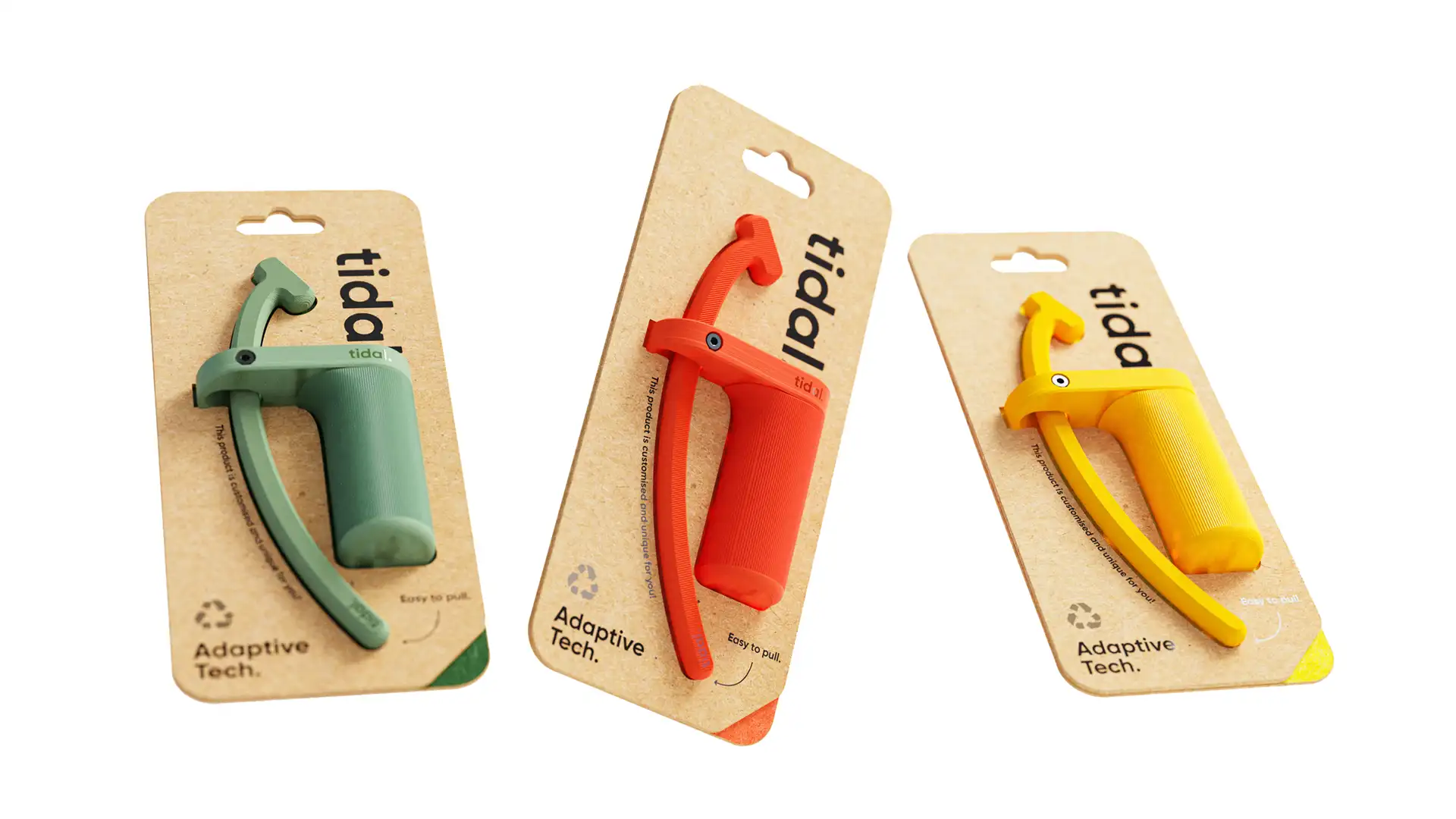
Tidal is a revolutionary platform transforming the way assistive technology (AT) is designed, produced, and experienced. Unlike traditional AT systems that rely on mass production and one-size-fits-all solutions, Tidal empowers users to co-create their own devices—ensuring personalised fit, greater usability, and long-term satisfaction.
At the core of Tidal is a user-centred digital platform that connects individuals with healthcare professionals to collaboratively design assistive products tailored to real-world needs. This co-creation process enables users to select, customise, and adapt designs from a curated digital library in real time. Using intuitive 3D visualisation tools, users can modify dimensions, features, and aesthetics—no formal design training required. Healthcare providers support the process, ensuring clinical appropriateness without the need for extended in-person consultations.
Once designs are finalised, they are produced locally using a distributed network of 3D printing hubs. This model drastically reduces lead times, production waste, and shipping emissions. It also allows for rapid iterations and adjustments based on user feedback, making AT more responsive and accessible than ever before.
The impact of Tidal’s innovation is profound. Currently, up to 70% of assistive devices are abandoned due to poor fit or lack of personalisation. Tidal directly tackles this challenge by enabling user agency from the outset, dramatically increasing adoption and retention rates. Users receive devices that not only work better but also reflect their personalities and preferences—moving away from the clinical, stigmatised appearance typical of traditional AT.
From a healthcare perspective, Tidal streamlines service delivery. By digitising customisation and decentralising production, it eliminates redundant consultations, reduces waiting times, and lowers inventory requirements. Providers can deliver high-quality, bespoke solutions faster and at a fraction of the cost of conventional models.
Tidal also addresses significant environmental and social challenges. Its localised production system uses recycled and recyclable materials, slashes carbon emissions associated with transport, and reduces excess inventory waste. The platform’s remote co-design capabilities lessen the need for travel, making it especially impactful for users in rural or underserved areas.
Beyond function and sustainability, Tidal redefines the emotional experience of using assistive technology. Its products are intentionally designed with modern aesthetics and customisable features that celebrate individuality—bold colour palettes, elegant forms, and refined finishes contribute to a sense of pride and ownership. This design philosophy reduces stigma and promotes positive identity for users.
Tidal represents a paradigm shift in how we conceive, create, and deliver assistive technology. It replaces a rigid, top-down system with a dynamic, inclusive, and sustainable alternative—one that honours the diversity of user needs while optimising for efficiency and environmental responsibility.
By integrating digital co-creation, local 3D printing, and human-centred design, Tidal sets a new standard for personalised assistive solutions. It not only improves lives—it transforms them, proving that the future of assistive technology is flexible, empowering, and designed with dignity at its core.
Category:MedicalAward Year:2025Designers:PDR, Cariff, United KingdomManufacturer:Jonathan Howard, Rehabilitation Engineering Unit at Swansea Bay University Health Board (SBUHB), Swansea Bay University Health Board, Morriston, United Kingdom